
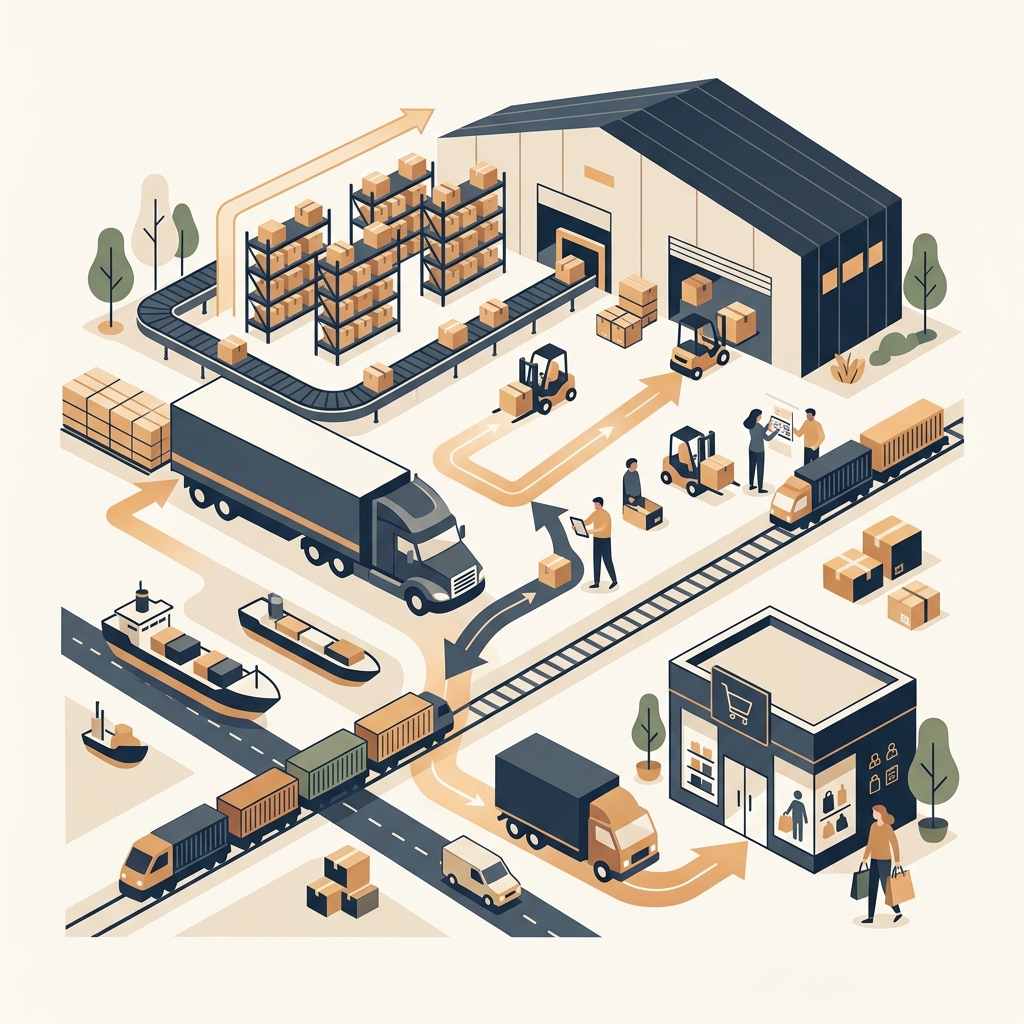
In my twenty years of commercial experience—ranging from branch-level operations at Pryvatbank to leading sales portfolios at Kyivstar and managing nationwide construction materials distribution at Budmax Group—I have observed a recurring, critical pattern. Small and mid-sized enterprises (SMEs) frequently operate under the assumption that their primary bottleneck is sales volume. They believe that if they could only increase revenue by twenty or thirty percent, their cash flow struggles would vanish. Yet, when they achieve that sales growth, they are shocked to discover that their bank accounts remain stubbornly low, while their operational friction increases exponentially.
The hard truth is that sales growth without operational discipline is a multiplier of waste. In high-cost or unpredictable markets, particularly within the retail and logistics sectors, the most reliable source of expansion capital is not outside financing or sales increases. It is the hidden capital already trapped inside your inefficient, friction-heavy workflows.
When operations are uncoordinated, cash is locked up in stagnant inventory, excess warehousing space, delayed delivery turnarounds, and employee hours spent fixing avoidable mistakes. This guide outlines a practical, execution-focused methodology to audit your workflows, identify waste, and unlock margins—without the need for massive capital investment or complex, expensive software suites.
The Myth of Massive Automation
When business owners realize their operations are sluggish, their immediate impulse is often to invest in technology. They purchase high-end Enterprise Resource Planning (ERP) databases, custom warehouse management systems (WMS), or complex customer relations pipelines. These systems are marketed as magic bullets that will instantly organize your team and streamline processes.
However, in the SME sector, massive automation initiatives fail more often than they succeed. The reason is simple: automating an inefficient, broken process merely allows you to make mistakes faster and at a larger scale.
For a small team of twenty to eighty employees, a complex software suite introduces cognitive friction. Workers spend more time fighting user interfaces and entering data to satisfy the system than they do packing boxes, verifying orders, or speaking with customers. Furthermore, custom software implementation requires months of training, eats up precious focus, and carries high recurring licensing costs.
Before you spend capital on software, you must build robust, analog operational discipline. You must organize your processes so cleanly that they can be run efficiently on a whiteboard and a standard spreadsheet. Only when your manual workflows are optimized should you consider automating them.
Actionable Strategy 1: Bottleneck Mapping
To unlock trapped capital, you must first locate where it is bottlenecked. Most business owners look at their operations from a bird's-eye view, blaming vague categories like "staff laziness" or "bad logistics." To achieve real change, you must map the exact step-by-step path of your two most critical flows: the flow of physical goods and the flow of information.
Take a physical notepad and walk the warehouse floor. Follow a single customer order from the moment the sales representative receives it to the second the truck departs. Document every single handoff, delay, and confirmation.
"If an order sits in a sales rep's inbox for four hours before being entered, or if a warehouse packer must walk across the entire facility to print a shipping label, you have found a bottleneck. These small delays, multiplied by dozens of orders a day, destroy your delivery speeds and inflate labor costs."
In a recent audit for a mid-sized regional distributor, we mapped their order-to-dispatch workflow and discovered that a single customer order passed through five separate approval stages before warehouse packers were permitted to pick the goods. By removing three redundant validation steps and enabling key B2B accounts to auto-clear within preset credit limits, we reduced dispatch turnaround times from twenty-four hours to under four. This single workflow change unlocked cash flow by accelerating billing cycles and reduced customer complaints by forty percent—all without spending a single hryvnia on new software.
Actionable Strategy 2: Standardizing Front-Office & Distribution
In many small businesses, operations are run by "tribal knowledge." One seasoned employee knows exactly how to stack a delivery truck to prevent damage; another knows the unofficial discount parameters for specific clients. While this works when you have five employees, it breaks down completely as you scale. If a key employee falls ill or leaves, your operations grind to a halt.
Operational efficiency requires absolute standardization. Every frequent task must have a clear, plain-language standard guideline. These are not academic, forty-page process manuals that sit on a shelf. They are simple, single-page checklists placed physically at the workstation where the task is performed.
For example, in warehouse management, you must standardize the "dock-to-stock" cycle. When a delivery truck arrives at your facility, what are the exact steps for receiving, inspecting, and shelving those goods? By establishing a clear checklist—Verify manifest, Inspect box counts, Scan barcode, Shelve to matching sector within two hours—you eliminate lost inventory, reduce shelving errors, and ensure temporary staff can execute the task with minimal supervision.
Actionable Strategy 3: The 80/20 Rule in Inventory Management
One of the largest drains on SME capital is over-stocking. Out of fear of losing sales, business owners tie up massive amounts of cash in slow-moving inventory. They fill warehouses with items that sit on shelves for six months, racking up carrying costs (rent, utilities, insurance, damage risks) while starving other areas of the business of cash.
To solve this, apply the Pareto Principle (the 80/20 Rule) to your inventory. In almost every retail and wholesale operation, eighty percent of your revenue is generated by twenty percent of your product catalog (your "Category A" items). Conversely, eighty percent of your catalog (your "Category C" items) generates only five to ten percent of your sales.
Run a simple inventory analysis. Group your inventory into three categories:
- Category A (High Velocity): The top twenty percent of items that turn over rapidly. These must never go out of stock. Maintain tight, dynamic re-order thresholds for these goods.
- Category B (Medium Velocity): Standard items with steady, predictable turnover. Maintain moderate safety stocks.
- Category C (Low Velocity): Slow-moving, niche items. These represent your trapped capital. Reduce their stocking levels to the absolute minimum, or switch to a just-in-time ordering model where you only procure them after receiving a firm client deposit.
By liquidating or scaling back your slow-moving Category C stocks, you immediately free up cash. In my experience, a rigorous inventory cleanup can unlock ten to twenty-five percent of warehouse space, reducing rental overhead and injecting immediate liquid cash back into your active operations.
A Practical Scenario: The 30% Efficiency Gain
To see how these strategies interact, let us look at a practical scenario modeled on Ukrainian SME realities. Consider a construction materials distributor operating in a highly competitive market. They were facing high overhead costs, margin erosion, and frequent shipping delays.
Instead of embarking on a costly sales drive, we implemented a three-part operational cleanup:
- Layout Redesign: We re-organized the physical warehouse layout so that Category A (high-velocity) items were placed closest to the shipping docks, reducing total walking distances for packers by sixty percent.
- Simplified Handoffs: We combined the sales order confirmation and warehouse dispatch tickets into a single document, eliminating double data entry.
- Supplier Delivery SLA: We negotiated strict delivery windows with suppliers, reducing unloading queue delays at our loading bays.
Within ninety days, the results were clear: warehouse labor hours fell by twenty percent, shipping errors were reduced by eighty percent, and overall inventory turnover rates increased by thirty percent. The business successfully squeezed operational margins, unlocking capital that allowed them to self-finance a B2B expansion drive without taking on bank debt.
Conclusion: Operational Hygiene as a Strategy
Unlocking capital through operational efficiency is not a one-time project. It is a philosophy of continuous improvement. It requires business owners to step back from daily emergencies and build structured, disciplined systems.
By mapping your bottlenecks, standardizing your key workflows, and managing your inventory velocity, you build a business that is lean, agile, and highly profitable. Do not let your hard-won sales revenue drain away through operational waste. Turn inward, audit your systems, and unlock the hidden capital waiting inside your operations today.